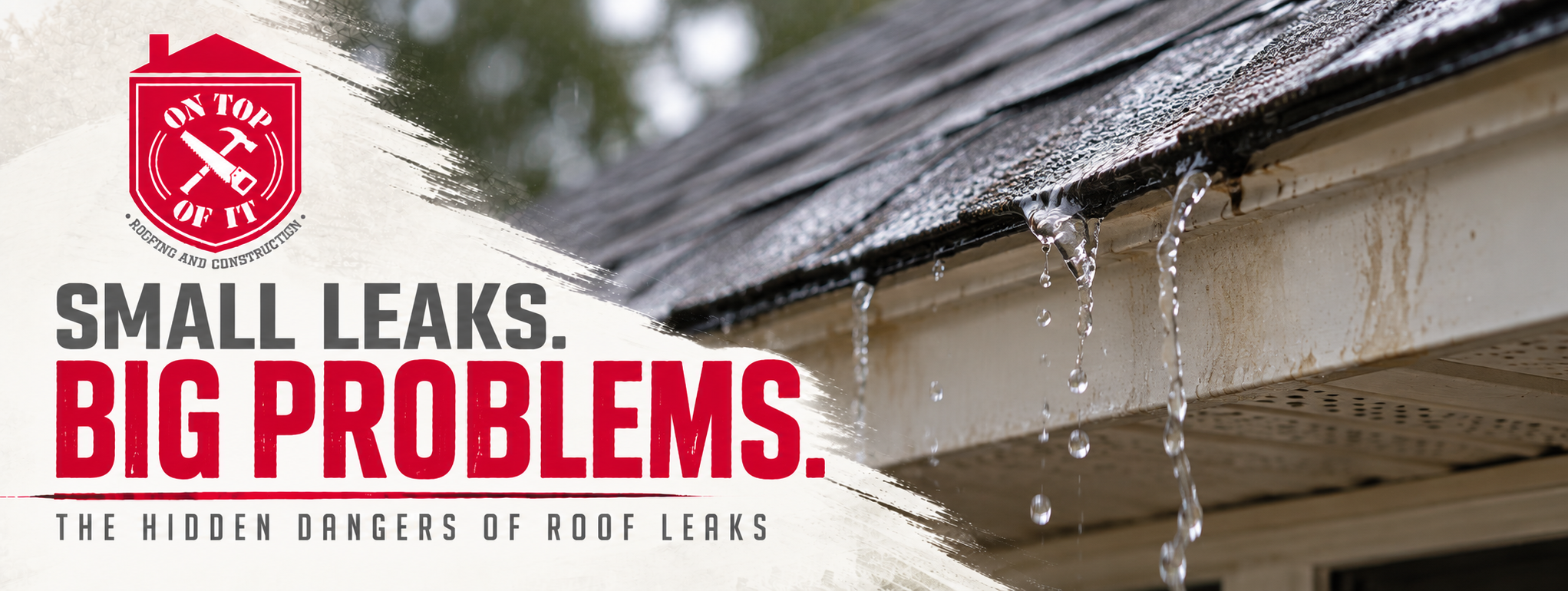
A small water stain on the ceiling. A few drops of water during a heavy rainstorm. A damp spot in the attic.
These might not seem like major concerns, but when it comes to your roof, even the smallest leak can lead to serious problems if left unaddressed.
Many homeowners assume that if a leak isn’t causing noticeable damage, it can wait. Unfortunately, water has a way of finding its way into places you can’t see, and the damage may be spreading long before it becomes obvious.
At On Top of It Roofing & Construction, we know that catching roofing problems early can make a major difference in protecting your home and avoiding expensive repairs.
Here’s why you should never ignore even a small roof leak.
1. Water Damage Can Spread Beyond the Original Leak
One of the biggest misconceptions about roof leaks is that the damage stays in one place.
In reality, water can travel along rafters, insulation, and other building materials before becoming visible inside your home.
That small stain on your ceiling might be several feet away from the actual source of the leak.
Over time, moisture can damage:
- Drywall and ceilings.
- Attic insulation.
- Wooden framing and roof decking.
- Interior paint and finishes.
- Electrical fixtures and surrounding materials.
What starts as a minor roofing issue can quickly become a much larger home repair project.
The sooner a leak is identified and repaired, the better your chances of limiting additional damage.
2. Moisture Can Lead to Mold and Mildew
A leaking roof doesn’t just create visible water damage. It can also introduce moisture into areas of your home where mold and mildew may develop.
Attics, insulation, and enclosed wall spaces can provide favorable conditions for mold growth when moisture remains present.
Mold can damage building materials and may contribute to indoor air quality concerns.
Because these areas are often hidden, homeowners may not realize there’s a problem until they notice a musty odor, discoloration, or more extensive damage.
Repairing the source of unwanted moisture is an important step in preventing these issues.
3. Your Roof’s Structural Materials Could Be at Risk
Your roofing system is made up of more than shingles.
Beneath the visible surface are layers of materials designed to support your roof and protect your home.
When water repeatedly enters the roofing system, it can cause wood decking and other structural components to deteriorate.
Over time, prolonged moisture exposure may lead to:
- Rotting roof decking.
- Weakened wooden framing.
- Deteriorating support materials.
- Sagging or uneven roof areas.
- More extensive repair needs.
Structural damage isn’t always visible from the outside, making professional inspections especially important when a leak has been present for an extended period.
Addressing the issue early may help prevent the need for more involved repairs later.
4. Small Leaks Can Become Bigger Problems During Winter
Kentucky weather can change quickly, especially as fall transitions into winter.
Cold temperatures, freezing rain, snow, and ice can make existing roofing problems more complicated.
When water enters vulnerable areas of your roof, freezing and thawing cycles may contribute to additional deterioration.
Ice buildup and poor drainage can also increase the risk of moisture finding its way beneath roofing materials.
A small leak that seems manageable during a mild fall rainstorm may become a much bigger concern during harsh winter weather.
That’s why fall is such an important time to address roofing problems before colder conditions arrive.
5. Delaying Repairs Can Increase Your Costs
It’s easy to put off a repair when the problem seems minor.
However, waiting can sometimes turn a relatively straightforward roofing repair into a much larger expense.
For example, a damaged section of flashing might initially require a targeted repair. If moisture continues entering the home, the resulting damage could eventually involve roof decking, insulation, drywall, and interior finishes.
The cost of addressing multiple damaged areas can be significantly higher than repairing the original source of the leak.
Not every leak requires a roof replacement, and many roofing problems can be corrected with appropriate repairs.
The important thing is identifying the cause before the damage spreads.
Common Causes of Roof Leaks
Roof leaks can develop for several reasons, and the source isn’t always obvious.
Some of the most common causes include:
Damaged or Missing Shingles
Strong winds, aging materials, and storm damage can create openings that allow moisture beneath your roof’s protective layers.
Deteriorating Flashing
Flashing around chimneys, vents, skylights, and roof transitions helps direct water away from vulnerable areas. When flashing becomes loose or damaged, leaks can develop.
Clogged Gutters
When gutters become blocked with leaves and debris, water may back up around the roofline and contribute to moisture problems.
Aging Roofing Materials
Over time, roofing materials naturally deteriorate, making older roofs more susceptible to leaks and weather damage.
Improper Installation
Roofing materials that weren’t installed correctly may develop problems earlier than expected.
Determining the actual source of a leak is essential for making an effective, lasting repair.
Warning Signs You May Have a Roof Leak
Not every roof leak results in water dripping from the ceiling.
Sometimes, the warning signs are much more subtle.
Keep an eye out for:
- Brown or yellow stains on ceilings.
- Peeling or bubbling paint.
- Damp or discolored attic insulation.
- Musty odors in the attic.
- Water marks around chimneys or vents.
- Missing or damaged shingles.
- Unexplained moisture along interior walls.
If you notice any of these signs, it’s worth having your roof inspected.
Avoid climbing onto a damaged or wet roof yourself. A roofing professional can evaluate the problem more safely.
Why Professional Roof Inspections Matter
Finding the source of a roof leak isn’t always as simple as looking directly above a water stain.
Water can travel through multiple layers of a roofing system before appearing inside the home.
A professional inspection can help identify damaged materials, vulnerable areas, and potential causes of moisture intrusion.
At On Top of It Roofing & Construction, we understand the importance of looking beyond the obvious symptoms to determine what your roof actually needs.
Whether that means addressing damaged flashing, replacing compromised shingles, or evaluating a larger roofing concern, the goal is to help protect your home from further damage.
Don’t Let a Small Leak Become a Big Problem!
Your roof is one of the most important parts of your home, and even minor damage deserves attention.
Ignoring a leak won’t make it disappear. In many cases, waiting only gives moisture more time to cause problems.
If you’ve noticed water stains, missing shingles, or signs of a possible roof leak, don’t wait until the damage becomes more serious.
Contact On Top of It Roofing & Construction today to discuss your roofing concerns and take the first step toward protecting your home.
From roofing repairs and replacements to gutters, siding, and exterior construction, we’re here to help keep your property in great shape.
When it comes to protecting your home, we’re always On Top of It!